
7 SIP Mistakes That Ruin Your Returns: A Beginner’s Guide (2026)
Highlights
Introduction: The Day Shankaran Saw “Red”
Shankaran Pillai started his SIP in January. He was happy. The market was going up.
In March, the market corrected. His portfolio app showed a big red arrow: -4%.
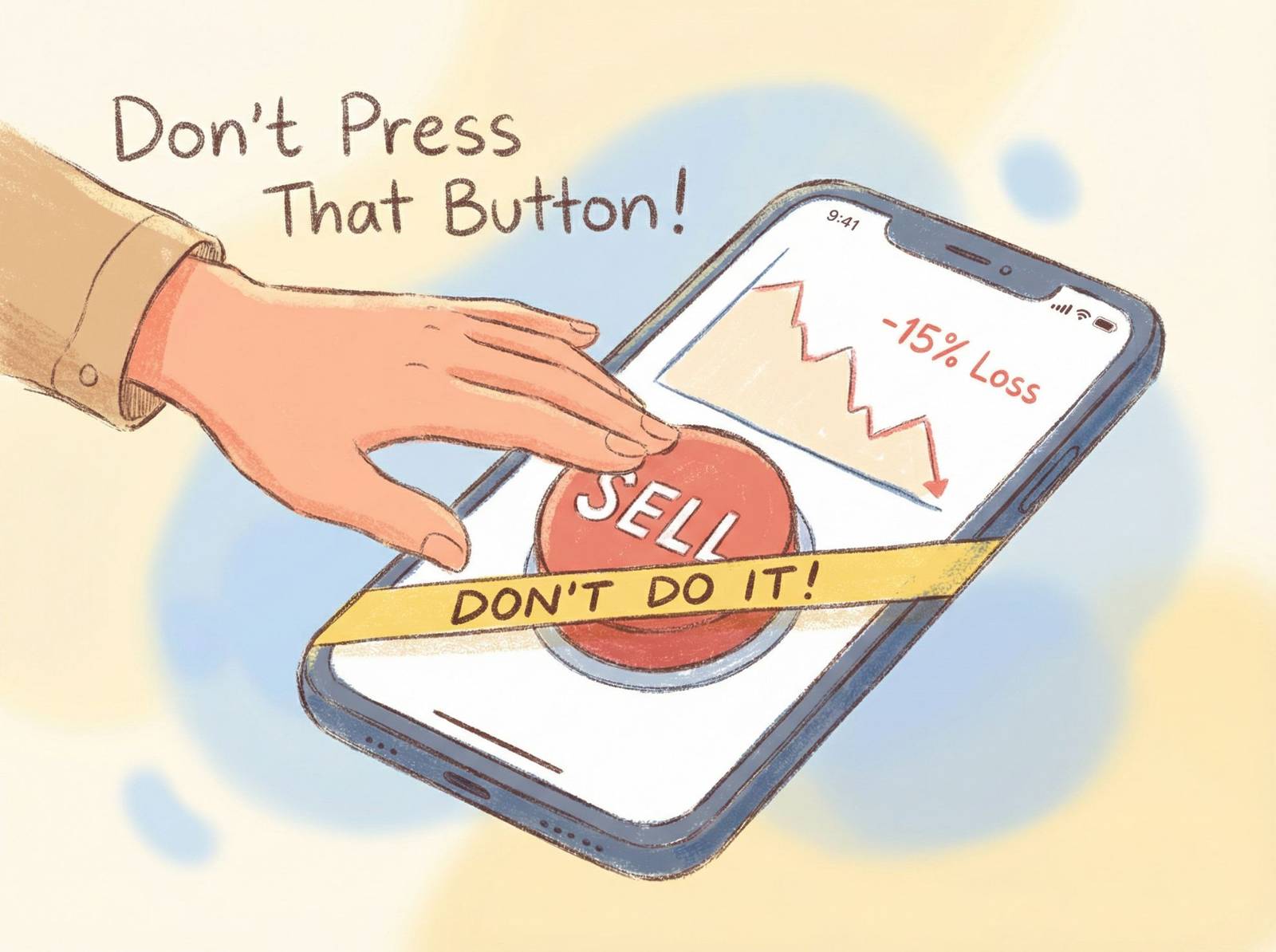
Shankaran panicked. “My money is vanishing!” he shouted. “I must stop the SIP immediately and take out whatever is left!”
Stop, Shankaran.
This is the moment where investors are either made or broken. If Shankaran withdraws now, he turns a temporary “paper loss” into a permanent “real loss.”
Investing is simple, but it is not easy. The math is easy; the psychology is hard.
If you want to create real wealth (Crores, not Lakhs), you must avoid these 7 deadly mistakes that trap 90% of beginners.
Mistake #1: Stopping SIP When the Market Crashes
This is the #1 wealth killer.
When the market is down (Red), share prices are cheap.
- Scenario A: You stop the SIP. You buy nothing. You wait for prices to go up.
- Scenario B (The Smart Way): You continue the SIP. Your ₹5,000 buys More Units because they are on “Sale.”
The Shankaran Logic:
When Amazon has a “50% Off” sale on shoes, Shankaran runs to buy.
When the Stock Market has a “10% Off” sale (Correction), Shankaran runs away.
Don’t run. The lower the market goes, the more units you accumulate. When the market eventually recovers (and it always has), those cheap units will explode in value.
SIP vs. RD: 5 Reasons Why SIP Beats Recurring Deposits
Mistake #2: Choosing “Dividend” Instead of “Growth”
When you select a Mutual Fund, you see two options:
- Growth Plan
- IDCW (Income Distribution cum Capital Withdrawal) / Dividend Plan
Shankaran loves “Pocket Money.” He chooses the Dividend option so he gets ₹500 back into his bank account every few months.
Why this is a mistake:
- Tax: That dividend is taxable at your income slab rate (30% if you are a high earner).
- Compounding: By taking the money out, you interrupt the compounding cycle.
The Fix: Always choose Growth. Let the profit stay in the fund and earn more profit on itself.
Mistake #3: Investing for 6 Months (Short-Term Thinking)
“I will try this SIP thing for one year,” says Shankaran.
Bad idea.
Equity Mutual Funds are volatile in the short term. In 1 year, you might get +30% or -20%. It is a coin toss.
But over 7-10 years, the probability of a negative return is historically near zero.
SIP is like planting a mango tree. If you dig it up every 6 months to check the roots, the tree will die. Give it at least 5 years.
How to Use a SIP Calculator to Plan Your ₹1 Crore Goal
Mistake #4: Checking the NAV Daily
Do you check the price of your house every morning? No. You check it maybe once in 5 years.
Why do you check your SIP daily?
- Daily Checking = Emotional Decisions.
- If it is up, you get greedy. If it is down, you get fearful.
The Fix: Delete the app from your home screen. Check it once every 6 months or once a year when you rebalance your portfolio.
Mistake #5: Collecting Funds Like Pokemon (Over-Diversification)
Shankaran thinks: “If one fund is safe, 10 funds are safer!”
So he puts ₹500 in HDFC, ₹500 in SBI, ₹500 in Axis, ₹500 in Parag Parikh…
The Reality:
Most of these funds buy the same top companies (Reliance, Infosys, HDFC Bank).
- You are not diversifying; you are just duplicating.
- You are paying expense ratios to 10 different fund managers to do the exact same job.
The Fix: 1 or 2 good funds (e.g., 1 Index Fund + 1 Flexi Cap) are enough for 99% of investors.
Mistake #6: Not Increasing the SIP (The “Step-Up” Failure)
Shankaran starts a ₹5,000 SIP in 2026.
In 2030, he is still investing ₹5,000.
The Problem:
- His salary has doubled.
- Inflation has increased prices by 30%.
- But his investment is stagnant.
The Fix: Use the Top-Up or Step-Up feature. Instruct the bank to automatically increase your SIP amount by 10% every year. This small tweak can double your final retirement corpus.
Mistake #7: Waiting for the “Perfect Time”
“The market is at an All-Time High! I will wait for a crash.”
(6 months later…)
“The market crashed! I will wait for it to stabilize.”
Shankaran never starts.
The Truth:
Time in the market > Timing the market.
If you had invested in the Nifty 50 at its “peak” in 2008 (right before the crash) and just kept your SIP going, you would still be sitting on massive profits today.
Just start.
How to Start SIP Online in India: Step-by-Step Process
Conclusion: Be Boring to Be Rich
Good investing should be boring. It should be like watching paint dry or grass grow. If you want excitement, go to a casino (or watch a T20 match).
If your SIP journey is boring, you are doing it right.
Avoid these 7 mistakes, keep your head down, and let the magic of compounding turn your small savings into a mountain of wealth.
Ready to calculate your potential losses if you stop now?